
Okra
Free Seed Guide · Citrus County, FL
Abelmoschus esculentus
A tall, tough, heat-loving plant that shrugs off the worst of a Florida summer and just keeps handing you pods. It's one of the few vegetables that actually gets happier the hotter it gets. Here's everything I know about growing it.
Planting Guide
- When: Okra hates cold soil even more than most summer vegetables — wait until the soil has warmed up well past danger of frost, usually a couple weeks after your last frost date. In Citrus County that generally means mid-spring, and it'll keep producing right through the hottest part of summer.
- Depth & spacing: Sow seeds about ½ to 1 inch deep, 12–18 inches apart in rows 2–3 feet apart. Soaking seeds overnight in water before planting speeds up germination.
- Germination: Usually 7–14 days in warm soil — can drag on much longer if the soil's still cool.
- Support: None needed. Okra grows as a sturdy, upright stalk, not a vine — no trellis required, though tall varieties can benefit from a stake in windy spots.
If You Received a Plant
If you picked up a started seedling rather than seeds, get it into the ground or a larger pot within a day or two. Okra doesn't love having its roots disturbed, so handle the root ball gently and try not to break it apart. Water it in well right after transplanting, and give it a little relief from harsh midday sun for the first few days while it settles in.
Sun & Location
Full sun, no exceptions — okra wants at least 6 to 8 hours a day and genuinely performs better in the hottest, sunniest spot you've got. Give each plant room to grow; it can reach 4 to 6 feet tall and get fairly bushy by late summer.
Watering
Water regularly while seedlings are getting established, then ease back once plants are a foot or so tall — okra is genuinely drought-tolerant and handles dry spells better than most garden vegetables. Consistent moisture during flowering and pod set does make for better production, but soggy soil is more likely to cause problems than a few dry days.
Growing & Care
- Thin seedlings to your final spacing once they're a few inches tall — crowded plants stay smaller and produce less.
- A balanced fertilizer at planting and again when flowering starts is plenty. Too much nitrogen pushes leafy growth at the expense of pods.
- Mulch around the base to hold moisture and keep weeds down — okra doesn't compete well with weeds early on.
- Watch for aphids and stink bugs, especially once pods start forming; stink bugs in particular can scar developing pods.
Harvesting
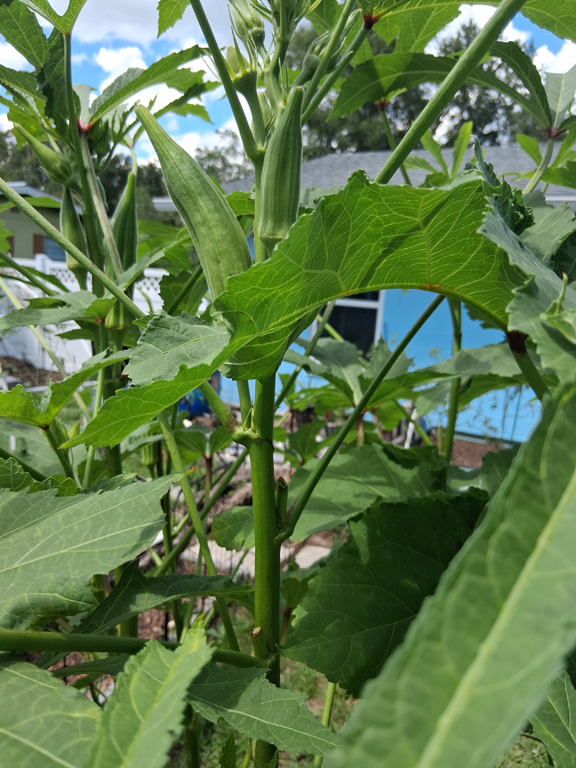
Pick pods young — 2 to 4 inches long is the sweet spot, when they're still tender enough to snap. Left on the plant even a day or two longer, they turn woody and fibrous fast, especially in hot weather. Check plants daily once they start producing; a healthy okra plant can put out a pod a day.
Wear gloves or long sleeves if you're sensitive — the pods and leaves on some varieties have a fine spine that can irritate skin.
What Can I Do With It?
Sliced and fried or roasted at high heat is the way to go if you're not a fan of okra's texture — high, dry heat keeps it from turning slimy. It's also the base of a good gumbo, holds up well pickled, and grills nicely whole, brushed with a little oil, when pods are on the smaller side.
It freezes well: slice, blanch for about 3 minutes, cool quickly, and bag it up for winter soups and stews.
Presently, I am freezing slices without blanching to be coated and baked using a keto recipe, will let you know how it held up. I am also testing a batch of pickled okra at PickleCountry.com
Saving Seeds
Let a few pods stay on the plant well past the eating stage, until they dry out, turn brown, and start to split open at the tip. Bring them inside to finish drying somewhere out of direct sun, then crack them open and shake out the seeds. Let the seeds dry another few days on a plate before storing them in a paper envelope or jar somewhere cool and dry.
Potential Problems
- Stink bugs pierce developing pods and leave scarred or misshapen okra — check the undersides of leaves and along the stalk.
- Aphids can cluster on new growth, especially early in the season.
- Slow or spotty germination is almost always a soil-temperature problem — if seeds are sitting without sprouting, the soil is probably still too cool.
- Missed harvests turn into tough, fibrous pods fast in hot weather — a plant that gets away from you for a few days can go from perfect to inedible.
How I Grow It
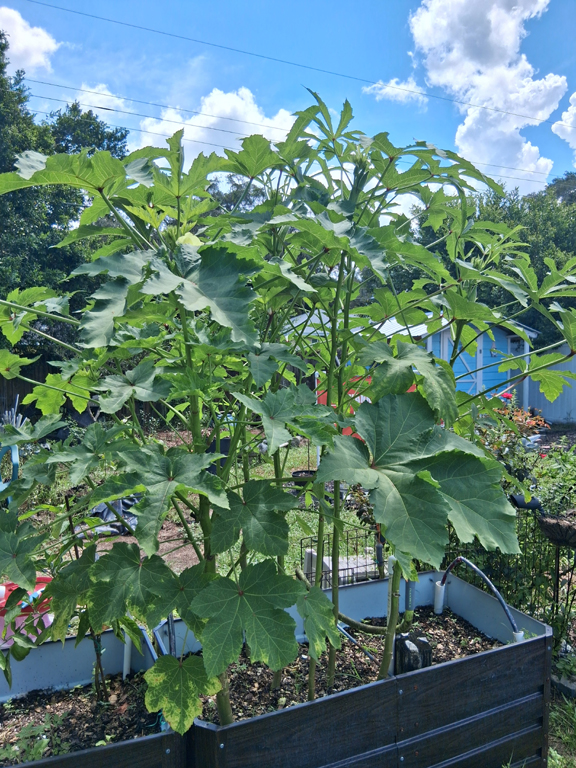
My okra is growing in a raised bed. This was my first time growing okra so I was surprised how fast and how tall the plants were. I was at the point of having to use a step stool to harvest the okra pods when I started googling what to do and i found that by cutting the top off the okra it would force the plant to produce side shoots and from those side shoots many more okra will grow, increasing the amount of pods you will harvest.
Garden & Weather
Planting times and pest pressure both shift with the weather — worth a quick check before you plant or before a big harvest push.
Happy growing — and thanks for taking some seeds home.