
Yard Long Green Beans
Free Seed Guide · Citrus County, FL
Vigna unguiculata subsp. sesquipedalis
Long, slender green pods that dangle from a fast-climbing vine and taste like a firmer, nuttier cousin of the green bean. They love Florida heat, they don't ask for much, and they'll keep producing pods for weeks once they get going. Here's everything I know about growing them, from the seeds I'm sharing.
Planting Guide
- When: Wait until the soil is warm — nights consistently above 60°F. Here in Citrus County that's usually mid-to-late spring, and again in late summer for a fall crop. They hate cold soil and won't germinate well in it.
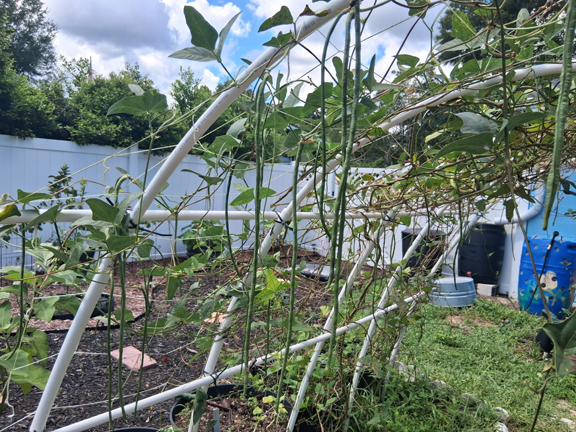
- Depth & spacing: Sow seeds about 1 inch deep, 3-4 inches apart. I have been planting in large pots with a trellis. (btw, pvc makes a great trellis.)
- Germination: 6–14 days depending on soil temperature — faster when it's warm.
- Support: Put the trellis up before or at planting, not after. These vines grow fast and will find something to climb whether you've planned for it or not.
If You Received a Plant
If you picked up an already-started seedling instead of seeds, get it in the ground or a pot within a day or two — it won't stay happy long in a small cup. Loosen the roots gently if they're circling the bottom, set it at the same depth it was growing, water it in well, and keep it out of harsh afternoon sun for the first couple of days while it settles in.
Sun & Location
Full sun — 6 to 8 hours a day at minimum. Pick a spot with something sturdy to climb: a trellis, cattle panel, fence, or even a tall tomato cage will work. Give the vines room to run; they'll easily reach 8 to 12 feet.
Watering
Keep the soil evenly moist while the plant is young and while it's flowering and setting pods — that's when it's most sensitive to drying out. Once established, it's fairly drought-tolerant, but consistent watering means more pods and fewer tough, stringy ones. Water at the base rather than overhead; wet leaves in Florida humidity invite fungal problems.
Growing & Care
- Guide young vines onto the trellis by hand for the first week or two — after that they'll climb on their own.
- A light feeding with a balanced fertilizer when vines start climbing, and again once flowering starts, is plenty. Too much nitrogen gives you a jungle of leaves and fewer green beans.
- Watch for aphids on new growth and flower buds — a strong spray of water or insecticidal soap knocks them back.
- Mulch around the base to keep roots cool and cut down on weeding.
Harvesting
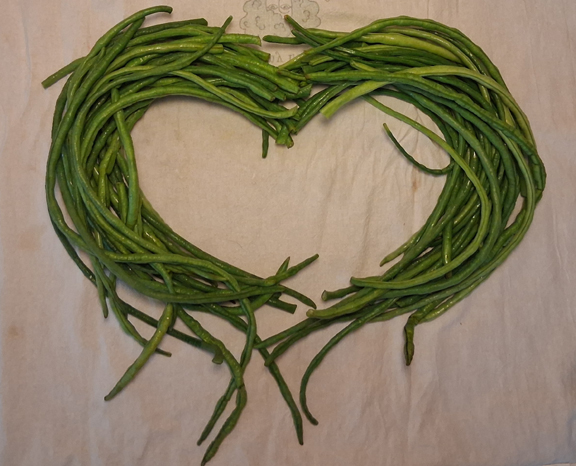
Pick green beans when they're 12–18 inches long, still slender, and snap easily — before the beans inside start to bulge and the pod turns tough and stringy. Check the vines every day or two once they start producing. The pods grow quickly and can go from just right to past their prime before you know it.
The more you harvest, the more the vine produces. Letting pods mature and dry on the vine signals the plant to stop setting new ones, so pick regularly if you want a long season of beans.
What Can I Do With It?
Treat it like a firmer, nuttier green bean. Cut it into 2–3 inch pieces and it holds up beautifully to high heat — stir-fried with garlic, onions, peppers, and a little soy sauce is the classic way to cook it. It also does well blanched and tossed into salads, or simmered into stews where you want something that won't go mushy.
It freezes well: blanch cut pieces for 2–3 minutes, cool quickly, and bag them up for winter.
I have a freezer full of green beans, I love green beans and now I can have green bean casserole and it's not even Thanksgiving! I am also pickling green beans for Pickle Country. Check it out my test kitchen, my successes and of course failures at PickleCountry.com
Saving Seeds
Pick a few strong, healthy vines and let some pods stay on well past the eating stage — all the way until they dry out, turn tan or brown, and feel papery and brittle. Shell the beans out, spread them somewhere dry and out of direct sun for another week or so to finish curing, then store them in a paper envelope or jar in a cool, dry place. Saved seed like this keeps for a few years if it stays dry.
Sometimes, over night it seems that the green bean will become bumpy with seeds. When that happens I will let them sit a day or two and then I will clip them and I let them dry out in my laundry room...and that is how you got my free seeds.
Potential Problems
- Aphids love the tender growth at the vine tips and on flower buds — check there first.
- Deer and rabbits will go straight for young seedlings before the vines toughen up; a temporary barrier around new plantings saves a lot of grief.
- Florida humidity can bring on leaf spot or mildew if the foliage stays wet — space plants for airflow and water at the base.
- Wind — a loaded trellis with 10+ feet of vine catches wind like a sail. Stake or anchor it well before a storm rolls through.
How I Grow It
I grow my yard long green beans in large pots, some with a metal trellis and others under a pvc trellis i built. I start seeds directly, I do not started indoors — they don't love having their roots disturbed by transplanting. Once they take off, they're one of the least fussy things in my garden: heat doesn't slow them down, and they keep pumping out pods through the worst of Florida summer when a lot of other beans give up. I check them every day once they start producing, because a pod left too long goes from perfect to tough almost overnight.
Garden & Weather
Planting times and pest pressure both shift with the weather — worth a quick check before you plant or before a big harvest push.